Kitchen Water Damage and Mold Remediation Project — Full Report (Los Angeles)
Water damage in a kitchen often starts small — a slow leak under the sink, a hidden pipe issue, or a spill that goes unnoticed. Without prompt action, water can saturate walls and insulation, leading to structural damage and mold growth. This comprehensive project report describes how ProHands Handyman handled a water damage and mold remediation job in a Los Angeles home, fully restoring the kitchen area and preventing further issues.
OUR WORKSWATER, FIRE, MOLD DAMAGERESTORATIONINTERNAL REPAIRSDRYWALLFLOORCLEANING
4/24/20252 min read
Initial Inspection and Damage Assessment
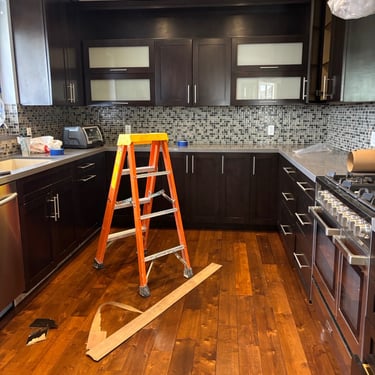
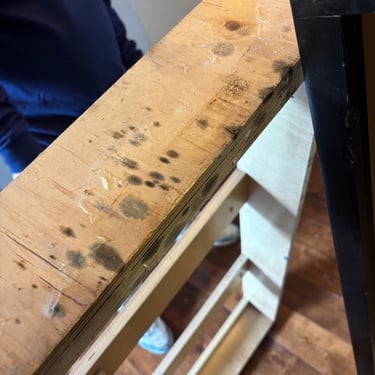
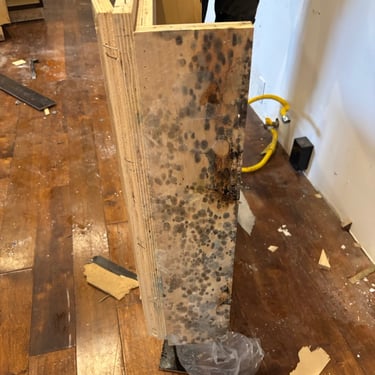
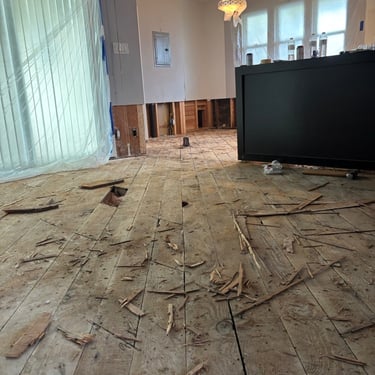
At the first visit, the homeowner reported visible staining on the wall near the base cabinets and a persistent musty odor. A closer inspection revealed softened drywall at the lower section of the wall and signs of moisture behind the cabinets. These indicators confirmed that water had been present long enough for mold to begin developing inside the wall cavity.
A proper assessment is critical at this stage. Treating only the surface without addressing hidden moisture would allow mold to continue spreading.
⸻
Stopping the Water Source
Before any repair work could begin, the source of the water intrusion had to be identified and eliminated. The issue was traced to a leaking plumbing connection under the kitchen sink. The affected connection was repaired, and water flow to the area was secured. This step ensured that no additional moisture would enter the wall during remediation.
⸻
Removal of Damaged Materials
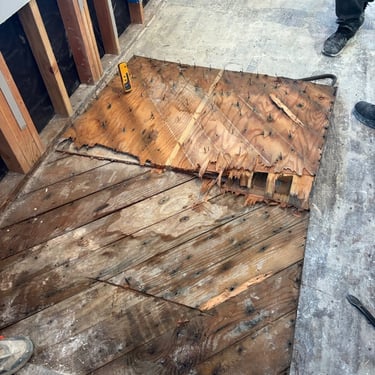
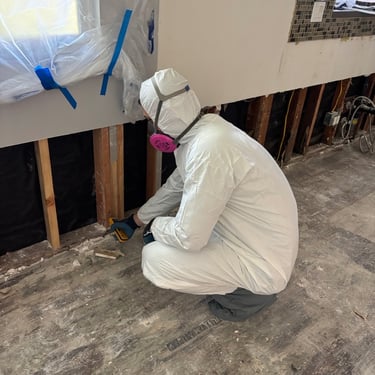
All water-damaged materials were carefully removed. This included sections of compromised drywall, wet insulation, and trim along the base of the wall. Removing these materials is essential because damp drywall and insulation retain moisture and create ideal conditions for mold growth.
The wall cavity was fully opened to allow proper access for treatment and drying.
⸻
Mold Remediation and Sanitizing
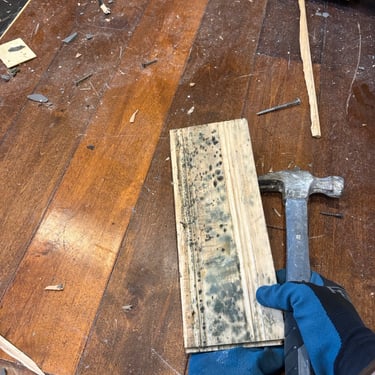
Once the damaged materials were removed, visible mold and affected surfaces inside the wall cavity were treated. The remediation process included applying professional antimicrobial solutions and thoroughly cleaning all exposed framing. This step eliminated active mold growth and reduced the risk of future contamination.
Addressing mold at this stage protects indoor air quality and prevents the problem from returning after the wall is closed.
⸻
Drying and Moisture Control
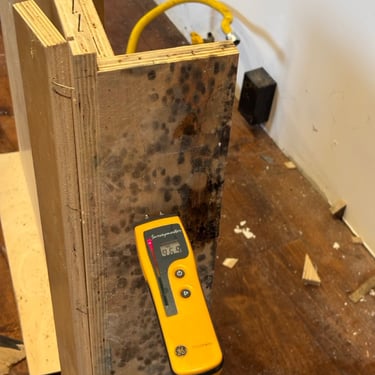
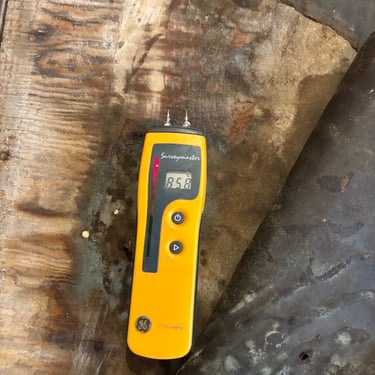
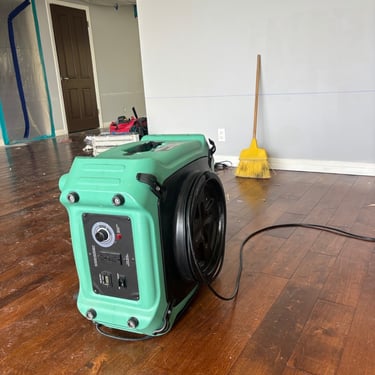
After remediation, the area was dried using professional equipment. Air movers and dehumidifiers were used to remove residual moisture from the framing and surrounding structure. Moisture levels were monitored to ensure the space was fully dry before reconstruction began.
Proper drying is one of the most important steps in any water damage repair. Skipping or rushing this phase often leads to recurring mold issues.
⸻
Drywall Installation and Surface Restoration
Once the structure was dry and sanitized, new drywall was installed to replace the removed sections. The joints were taped, mudded, and sanded to create a smooth, even surface that blended with the existing kitchen walls. Special attention was given to corners and transitions to ensure a seamless finish.
This stage restored the structural integrity and visual continuity of the wall.
⸻
Priming and Painting
After surface preparation, primer was applied to seal the new drywall. The wall was then painted to match the existing kitchen color. Careful blending ensured that the repaired area was visually indistinguishable from the surrounding surfaces.
The final result was a clean, finished wall with no visible signs of previous damage.
⸻
Why Proper Water Damage and Mold Remediation Matters
Water damage repair is more than cosmetic work. Without proper removal of wet materials, thorough drying, and mold treatment, problems often return behind freshly painted walls. A complete remediation process protects the structure of the home, improves indoor air quality, and prevents future repair costs.
This project required more than a simple patch and paint. It involved a full remediation sequence to ensure the kitchen was safe, dry, and fully restored.
⸻
Why Homeowners Choose ProHands Handyman
Homeowners in Los Angeles and surrounding areas choose ProHands Handyman for water damage and mold remediation projects because we focus on doing the work correctly from the start. Our approach includes detailed inspection, proper material removal, controlled drying, professional restoration, and clean finishing.
Each project is handled with attention to both structural safety and final appearance.
⸻
Conclusion
This kitchen water damage and mold remediation project successfully eliminated moisture intrusion, removed mold-affected materials, and restored the wall to its original condition. With the source of the leak fixed and the structure properly dried and rebuilt, the kitchen is once again a safe and functional space.
⸻
Need Help With Kitchen Water Damage or Mold Issues?
ProHands Handyman
Contact us to schedule an inspection and get a professional remediation plan.